




Emerging Leaders Program

A 6 or 9-month future leaders program that develops future leaders, first-time managers, and team leads into confident, capable leaders.

Leda platform

Trusted by MYOB, Camp Quality, Vicinity Centres, and 150+ organisations across Australia and New Zealand.

myob
campquality
vicinity
morton
tna

Who Is This Emerging Leaders Program For?

People stepping into leadership for the first time. Future leaders preparing to lead.

First-time managers

First-time managers

You got promoted because you're great at your job. Leading others is different. New manager training that actually works.

Aspiring leaders and high-potentials

Aspiring leaders and high-potentials

Your organisation sees leadership in you. This program helps you develop it deliberately, before you're thrown in the deep end.

Team leads

Team leads

You're already leading, but without formal development. This fills the gap between figuring it out and leading with real confidence.

Frontline managers

Frontline managers

You're closest to where the work happens. Frontline leadership shapes culture, performance, and retention.

Developed with world-class leadership researchers from Monash Business School

monash business school

Why Most Emerging Leader Training Fails

You've probably tried emerging leaders training before. It probably didn't stick. Not because your people weren't engaged. Because of how leadership is usually taught.

The Workshop Problem

The Workshop Problem

50-70%
forgotten within 24 hours

Intensive training relies on short-term memory

The Digital-Only Problem

The Digital-Only Problem

3-15%
completion rate

No accountability, no completion

The Individual Training Problem

The Individual Training Problem

80%
of isolated training fails

One person can't change team culture alone

Recognised by AACSB's Innovations that Inspire (2018).

AACSB is the global standard-setting body for business education

recognised by AACSB's Innovations that Inspire (2018)
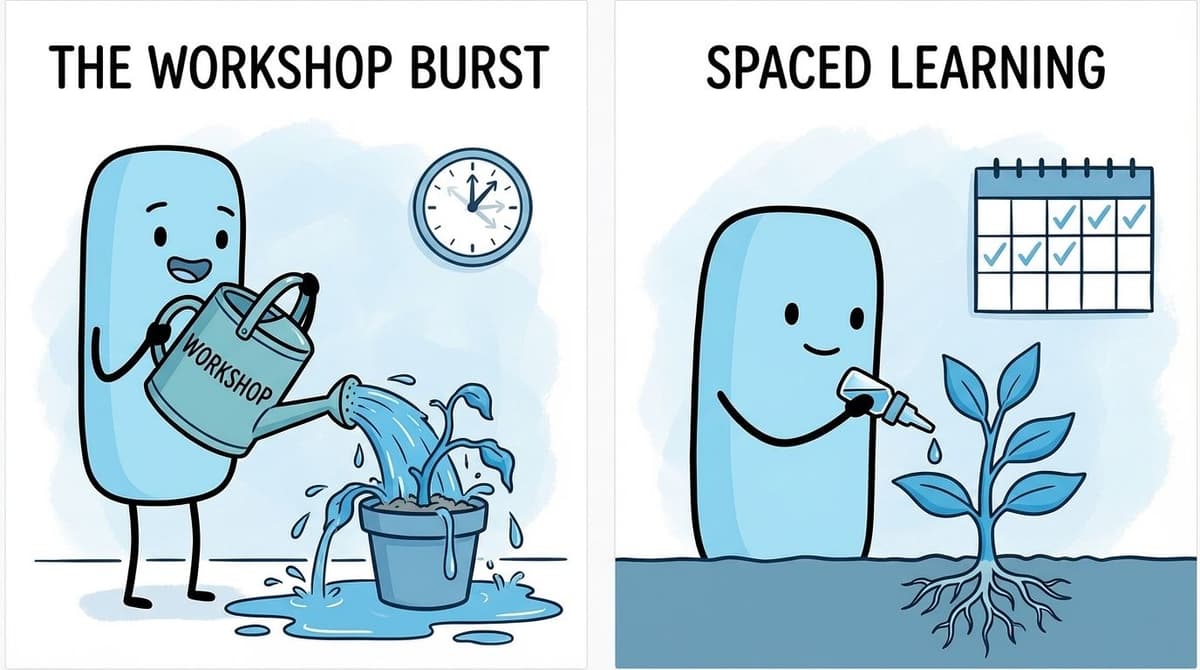
Workshop burst training versus spaced learning over time

Why Workshops Don't Stick

Most leadership training happens in a burst. Two days of energy, insight, good intentions. Then everyone goes back to work.

Research shows learners forget 50-70% of new material within 24 hours. After a week, retention drops to 10-20%.

Spaced learning, distributed over weeks or months, significantly outperforms intensive workshops. Effect sizes jumped from 0.71 to 0.88 when learning was spread out. That's why Leda builds development over 6-9 months, not 2 days.


Trusted by over 150 leading organisations.

myob
water corporation
supagas
camp quality
tna
Cohort-based learning versus isolated self-paced learning

The Digital-Only Problem

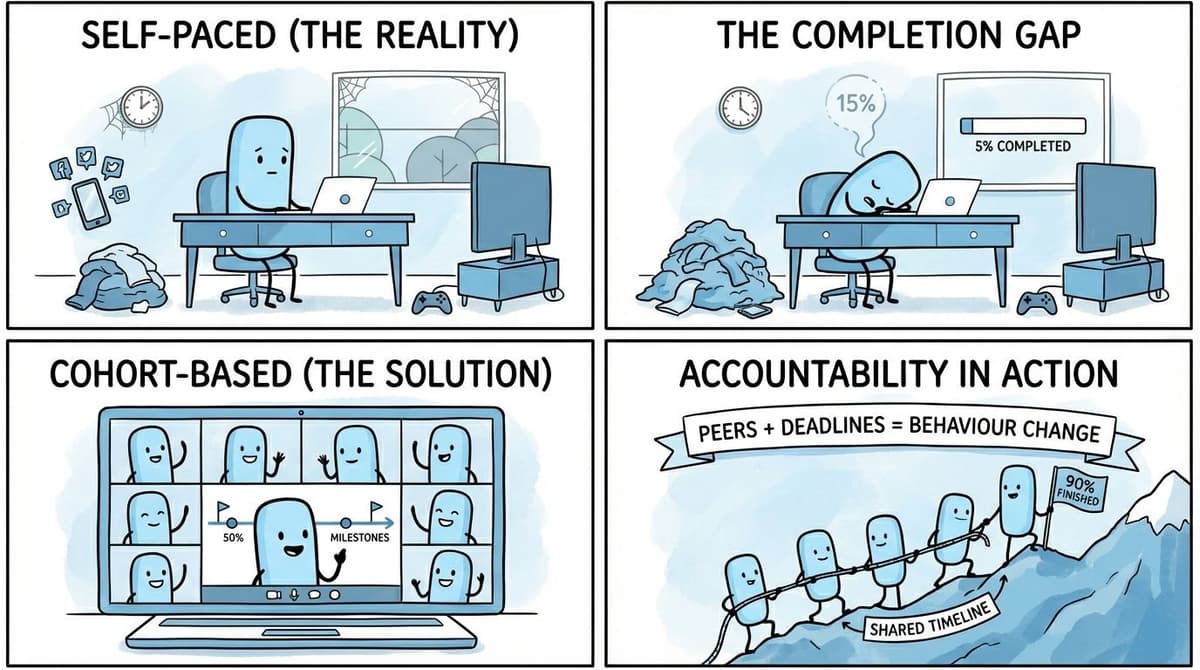
Self-paced online learning sounds efficient. Completion rates tell a different story.

Industry data for 2024-2025 shows self-paced courses hit 3% to 15% completion. The same content in a cohort format, with peers and shared timelines, sees 85-90%. The content isn't the difference. Accountability is.

Without peers, without deadlines, without facilitation, most people don't finish. Most digital learning becomes "just another online thing", something people sign up for, start, and quietly abandon. And finishing isn't even the point. Behaviour change is.

Trusted by over 150 leading organisations.

myob
water corporation
supagas
camp quality
tna
Individual training versus team-based development

The Individual Training Problem

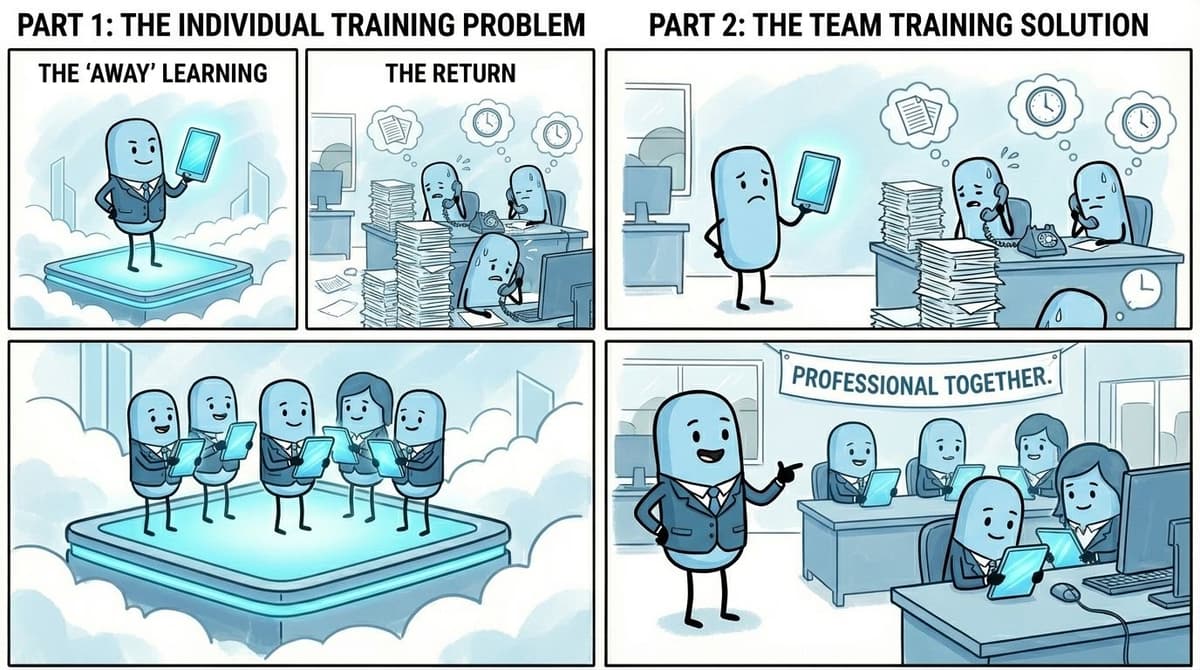
Sending one person on a course creates a different issue. They return with new language, new ideas, new approaches. And a team that hasn't shared the experience.

"What happened to Sarah at that course?" Research shows only 10-20% of corporate training investments produce measurable behaviour change. The rest is scrap learning. Training spend that produces nothing.

The biggest predictor of whether training transfers isn't course quality. It's manager support. When someone returns to an unchanged environment, team culture wins. Without shared language or team-based implementation, new habits don't survive. 80% of isolated training fails.

Built on Research. Proven in Practice.

Developed with world-class leadership researchers from Monash Business School

Monash Business School

Recognised by AACSB's Innovations that Inspire (2018)

AACSB is the global standard-setting body for business education.

AACSB

An Emerging Leaders Program Designed for Behaviour Change

Spaced learning that sticks

Spaced learning that sticks

Learning is spread across months. Each skill builds on the last. There's time to try things, fail safely, adjust, try again. A meta-analysis found spaced learning significantly outperforms intensive workshops. Effect sizes improved from 0.71 to 0.88. We designed around that evidence.

Cohort-based, not isolated

Cohort-based, not isolated

Emerging leaders learn in small groups of 8-12. They share experiences, troubleshoot real challenges, build a network that outlasts the program. When everyone speaks the same language and faces the same growth edges, change gets easier. No one's doing it alone.

Daily practice built in

Daily practice built in

Each day includes a short activity. Around 10 minutes. Not busywork. Real practice tied to the skill being developed. Over weeks and months, small actions become habits. Habits become how people lead.

Mentoring that creates accountability

Mentoring that creates accountability

Monthly mentoring sessions keep participants on track. They reflect on progress, work through obstacles, prepare for what's next. This isn't something people complete and forget. The structure holds them through the hard parts.

Trusted by over 150 leading organisations.

myob
water corporation
supagas
camp quality
tna

How the Emerging Leaders Program Works

Daily: 10 minutes

Daily: 10 minutes

Each day, a short activity tied to the current Journey. Videos, self-assessments, games, practical exercises. Designed for recall and real application. Not homework. Practice that fits busy schedules.

Weekly rhythm

Weekly rhythm

Each Journey focuses on one skill. Takes one to two weeks. Participants move at their own pace, but the cohort keeps everyone roughly aligned.

Monthly mentoring

Monthly mentoring

Once a month, the cohort meets with an experienced mentor. Facilitated sessions. Space to reflect, share challenges, learn from peers facing the same growth edges. Where insights become actionable. Where obstacles get worked through. Where accountability happens.

Small cohorts

Small cohorts

Groups of 8-12. Small enough for real conversation. Large enough for different perspectives. Not strangers in a webinar. A support network. People who understand what you're going through because they're going through it too.

Facilitation and support

Facilitation and support

Expert facilitators guide each cohort. A customer success contact makes sure the program runs smoothly.

Graduation

Graduation

Participants graduate together. Recognition that they've completed something substantial, alongside peers who shared the journey. Some organisations hold CEO-led ceremonies. The message to the organisation: this matters.

What They'll Learn

The program covers 13 Journeys. The progression is deliberate: manage yourself before you lead others.

What People Say

"This changed my life. Thank you for the opportunity to be part of this program and fulfil my destiny of being a leader."

MYOB Program Participant, Program Participant (MYOB)

"How they grow in their existing role, and show willingness to help take responsibilities away from me. Helps me focus on the right things."

MYOB Line Manager, Line Manager (MYOB)

"We saw results within the first year. Now in our fifth year it's part of the calendar."

MYOB Leadership Team, Leadership Team (MYOB)

Common Questions

Six or nine months. Both cover the full curriculum. The difference is pacing and depth of practice.

Thirteen Journeys. Daily activities (10 minutes). Monthly mentoring. Cohort learning in groups of 8-12. Platform access. Customer success support. Graduation.

About 10 minutes for daily activities. Monthly mentoring runs 60-90 minutes. Designed to fit busy schedules.

Mostly digital, with live mentoring over video. Works for distributed teams. Some organisations add in-person graduation.

Eight to Twelve. Small enough for real conversation. Large enough for different perspectives. The cohort benefit falls away below groups of 6.

People stepping into leadership or preparing to. First-time managers, high-potentials, team leads, supervisors, those in frontline management, recently promoted.

Completion rates of 88-93% on average, compared to 3-15% for typical digital learning. Behaviour change visible to managers and peers. Participants promoted. Long-term partnerships.

Behaviour change, not satisfaction. Completion rates, manager feedback, observable changes in how participants lead.

Yes. Many organisations run one cohort first.

Speak with us. We'll talk through your needs, team size, timeline.

Yes. The program is built for it. One healthcare tech client runs fully remote across Australia, New Zealand, and the UK — three countries, three time zones. Both their cohorts hit 100% completion. The online format means consistent delivery regardless of where people sit. Mentoring sessions work across time zones. The platform works on mobile. If anything, distributed teams benefit more from the cohort structure because it creates connection that wouldn't happen organically.

No. We work with organisations of all sizes across Australia and New Zealand. From ASX-listed companies running multiple cohorts to smaller teams developing their first group of emerging leaders. The program scales — whether you're running one cohort of 5-6 people or multiple cohorts across different locations.

Leaders aren't born. They begin with a chance, and the structure to grow.

Speak with Us
Loading...